DENVER — The Colorado Title Board has refused to give Colorado residents the opportunity to vote on making government transparency a state constitutional right.
The board voted 2-1 at an April 24 re-hearing that a proposed constitutional amendment, put together by a large stakeholder group from across the political spectrum, did not meet Colorado’s “single-subject” requirement, calling it too broad.
The 3-member Title Board is made up of representatives of the secretary of state, attorney general, and office of legislative legal services (OLLS).
Colorado’s single‑subject rule requires that every citizen-initiated ballot measure be only about one issue in an effort to keep non-related topics from being grouped together. Ballot measures referred by the legislature, however, are not subject to Title Board review, and go to voters as written by lawmakers.
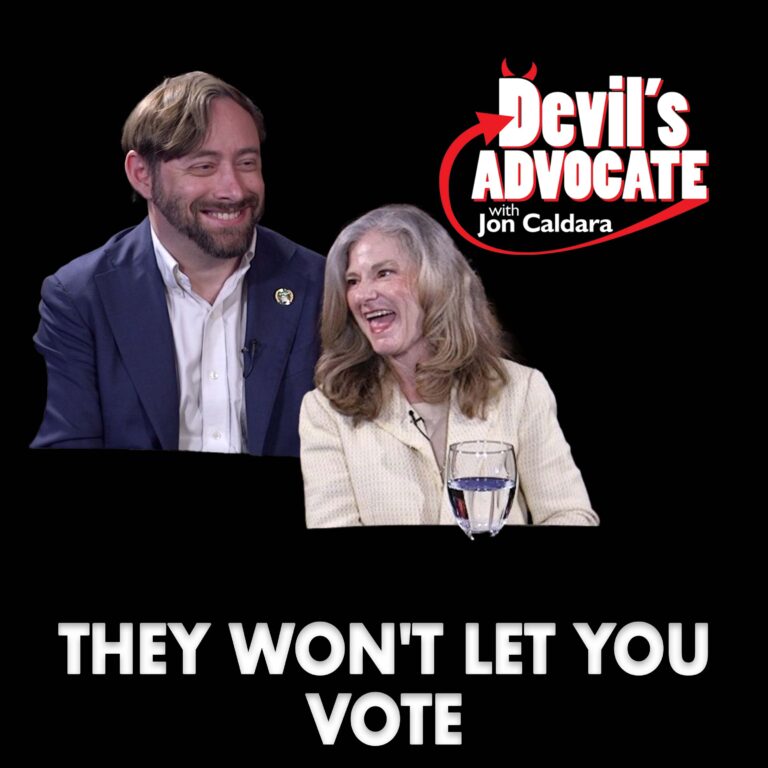
“The most unusual and unique political coalition perhaps in Colorado history, has come together to propose a constitutional change, making it a fundamental right that we the people know the affairs of government,” one of the sponsors of the proposal, Jon Caldara said previously.
Caldara is the President of Independence Institute, a free market think tank in Denver (and publisher of Complete Colorado). His co-sponsor on the measure is Beth Hendrix, executive director of the League of Women Voters of Colorado.
A ‘right to know’
The proposal would have enshrined standards for government entities to follow in regard to open records and transparency in Colorado’s Bill of Rights. Several states already put open records requirements in their constitution, including California and Illinois.
It was developed by a large group of organizations, journalists and individuals after the state legislature exempted itself from large portions of Colorado’s open meetings laws. There has also been attempts over the last three legislative sessions to weaken the state’s open records laws.
In addition to Independence Institute and the League of Women Voters, the coalition includes representatives from several media outlets (including Complete Colorado), the American Civil Liberties Union of Colorado, the Colorado Freedom of Information Coalition, Colorado Common Cause, the Colorado Broadcasters Association, and the Colorado Press Association.
For the first time in Colorado history, the changes would have included penalties, including a fine of $1,000 per violation for any government employee or public official who violated the laws.
The “right to know” amendment was intended to go before voters in November had the board agreed to move it to the next step. In a previous hearing, Board Chair Theresa Conley said she worried voters wouldn’t know whether to vote yes or no.
“This seems not just about open meetings and open records but also about information and knowledge that is beyond public documents,” she said.
Title Board rejects transparency
The board’s decision centered on the initiative’s potential to disrupt current laws. Conley said the measure’s impact on the status quo is too vague to summarize clearly for voters.
“The scope of this is hard to put into a question for the voters to understand,” Conley said, emphasizing that the board is tasked with explaining how an initiative would alter existing laws like the Colorado Open Records Act (CORA).
Brett Lilly, the attorney for Caldara and Hendrix, argued the subject was straightforward, calling it a fundamental right of access to government affairs.
Lilly compared it to a 2014 case where the state Supreme Court approved a single-subject title for a “right to Colorado’s environment.”
Caldara told the board if they used the standards applied to this initiative to many of Colorado’s constitutional rights would also be deemed multi-subject topics.
“Would they survive the scrutiny you’re giving this,” Caldara said. “How in the world could anyone bring forward any of these as a constitutional amendment.”
Board member Kurt Morrison agreed with Caldara, admitting that many US constitutional amendments would likely fail the single-subject rule (enacted in 1994) under the board’s reasoning.
For now, the measure is dead, as proponents have decided not to appeal the decision to the Colorado Supreme Court. According to Shayne Madsen, legal counsel for Independence Institute, the group is confident they can rework the language of the amendment and get it past the Title Board for a future election.